[smartslider3 slider=”5″]

75 INITIATIVES


58 PARTNERS

1 COALITION OF NETWORKS
Quick updates

UPDATES

BLOG
Reimagining ‘Wastelands’: Unlocking the Potential of India’s Commons
13 MAY 2025
A call to replace outdated notions of “wastelands” with a rights-based approach to India’s shared forests, pastures, and water bodies—home to over 350 million people.
KNOWLEDGE PRODUCT
Explore our DAJGUA (Dharti Aaba Janjatiya Gram Utkarsh Abhiyan) Playbooks—practical guides to support convergence, community planning, and commons governance across tribal geographies.
EVENTS
The 9th India Land and Development Conference (ILDC) 2025, happening from November 18–20, 2025 in Ahmedabad, where Common Ground will be participating in key sessions.
28/29 July 2025
CASE STUDIES
In Jharkhand, Gram Panchayat Help Desks are bridging the last mile, connecting rural communities to rights, entitlements, and commons restoration.
The Common Ground Initiative
Common Ground is a collaborative initiative bringing together civil society, government, researchers, and market actors to strengthen decentralised governance, restore ecological systems, and support leadership from Scheduled Castes, Scheduled Tribes, and women.
By focusing on 205 million acres of forests, pastures, and water bodies that sustain over 350 million rural people, it works to build the connections, processes, and support systems communities need to shape their futures and drive change at the pace and scale these times demand.
Our partners



















































What are Commons?
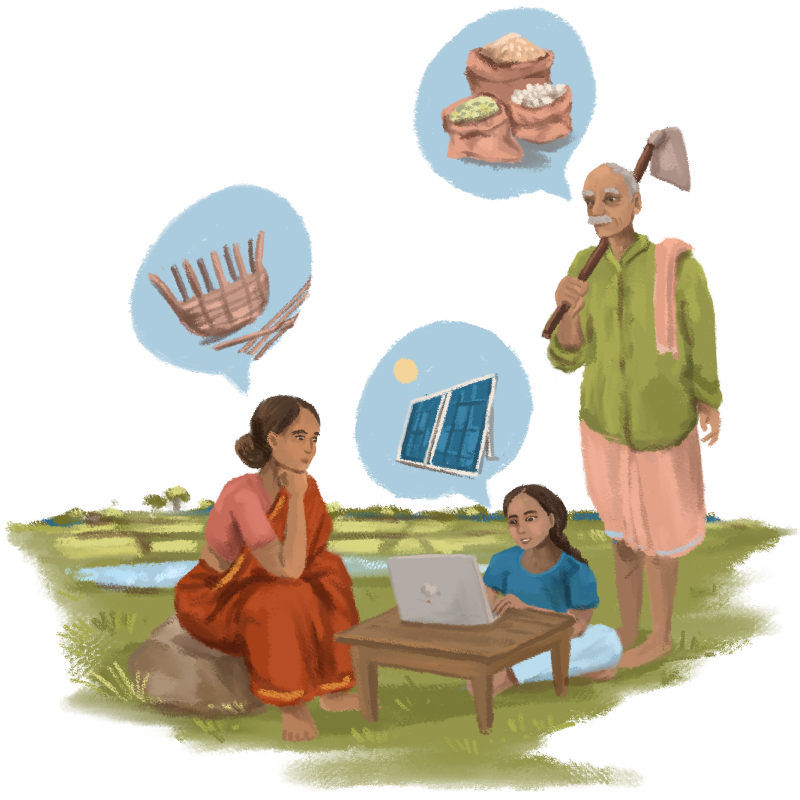
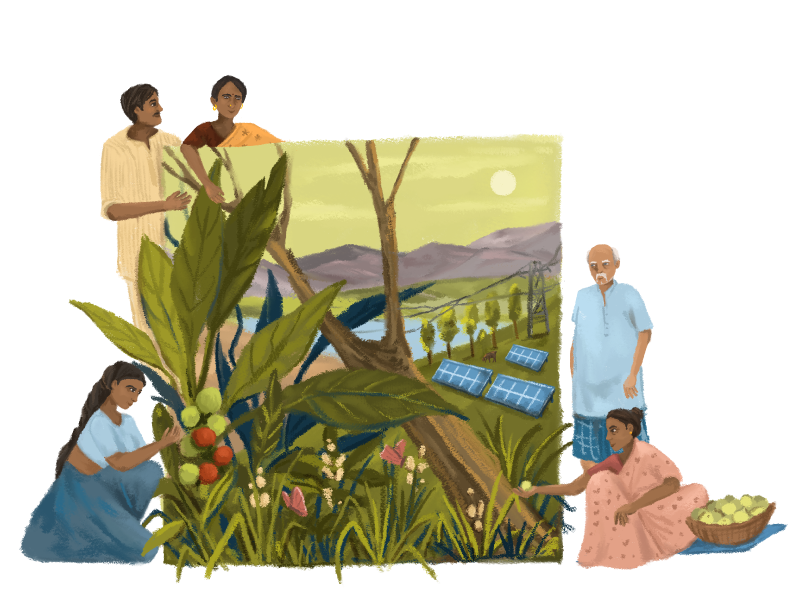
Commons are shared resources such as forests, pastures, and water bodies that communities govern collectively through local norms, mutual care, and self-regulation.
They also include cultural and knowledge systems that have evolved over generations. Commons enable collaborative use and stewardship, offering a powerful alternative to extractive models by centering community agency and self-governance.

Population Dependence
Over 350 million rural poor in India rely on common property resources for their livelihoods

Economic Value
Commons contribute around USD 90.5 billion (6.6 lakh crore) annually to the incomes of rural poor households

Land Area
Commons in India cover approximately 205 million acres

Self Governance
Commons are managed through self-regulatory local institutions such as Gram Panchayats, FRA committees, Van Suraksha Samitis, and Gram Sabhas that enable collective community decisions.